
Premature Bearing Failure: 4 Common Causes and How to Prevent Them
Dai Nhat Holdings Technical Team — Authorized distributor of ISB Industries industrial bearings in Vietnam.
A notable point from ISB Industries' original technical documentation, one the Dai Nhat Holdings technical team references daily when advising industrial customers: most cases of premature bearing failure are not caused by material fatigue — the natural cause tied to design life — but by operational factors that are entirely preventable. Below are the four most common causes and how to address each, based on ISB's official technical documentation.
Wrong type or size selection. This is the most common root cause. A bearing selected without matching the actual load, running speed, or environmental conditions will wear out far faster than its calculated life — even with no defect in the product itself. This is why supplying full operating parameters before ordering matters more than matching an old part number alone. See our article "How to Choose the Right Bearing for Your Machine" on the News page.
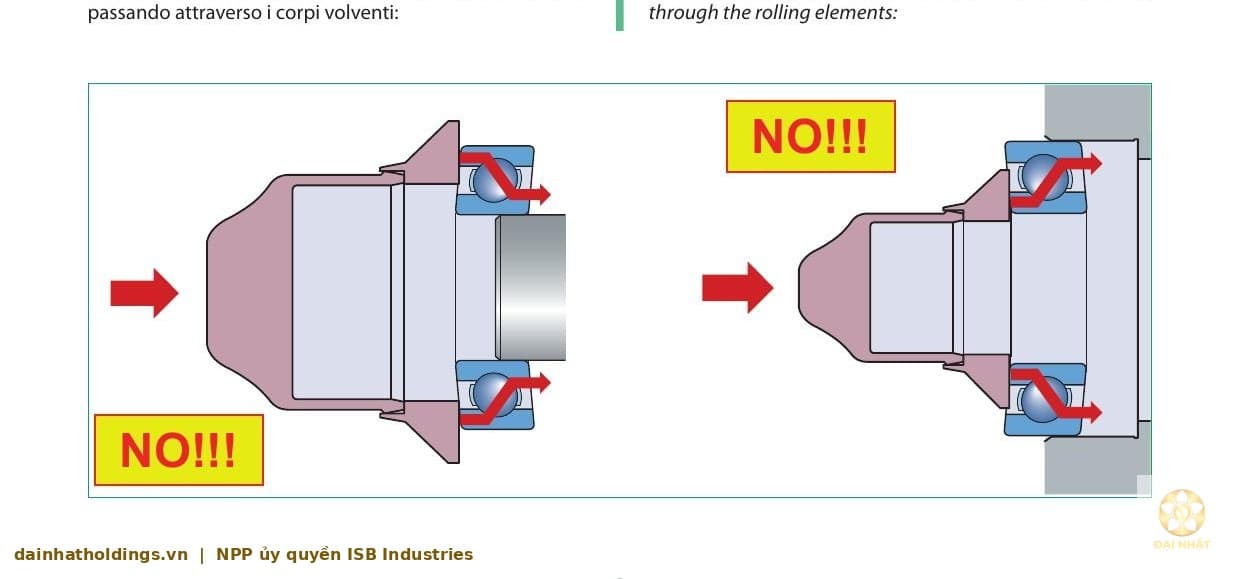
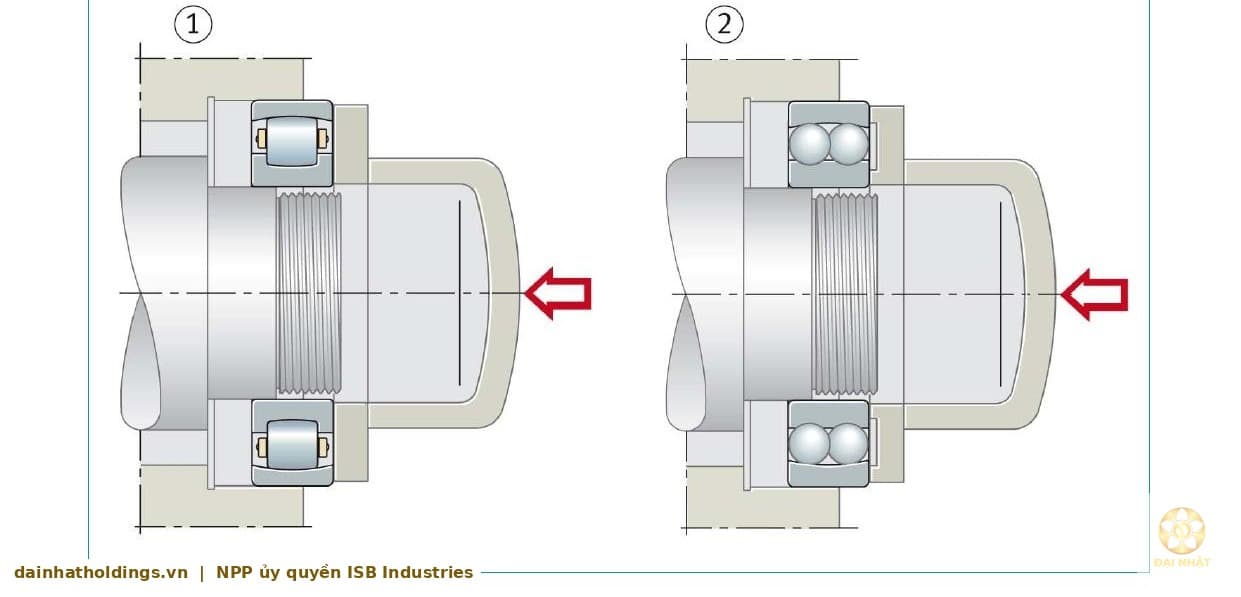
Incorrect mounting — the most common maintenance-stage error. When cold-press mounting a bearing (hammer and pad), the mounting force must be transferred through the ring being fitted (inner ring when mounting onto a shaft, outer ring when fitting into a housing) — never through the balls or rollers. In field support cases, this is the technical error the Dai Nhat Holdings technical team encounters most often when called in to analyse a failure — and it causes damage right at installation, before the machine even completes its first day of operation.
Improper or contaminated lubrication. Grease/oil serves three purposes: reducing friction, dissipating frictional heat, and protecting against corrosion. Over time, mechanical stress, temperature swings, and contaminant build-up degrade the lubricant's properties. The two most common errors: using the wrong grease type for the actual load/speed/temperature conditions, and contamination introduced during maintenance.
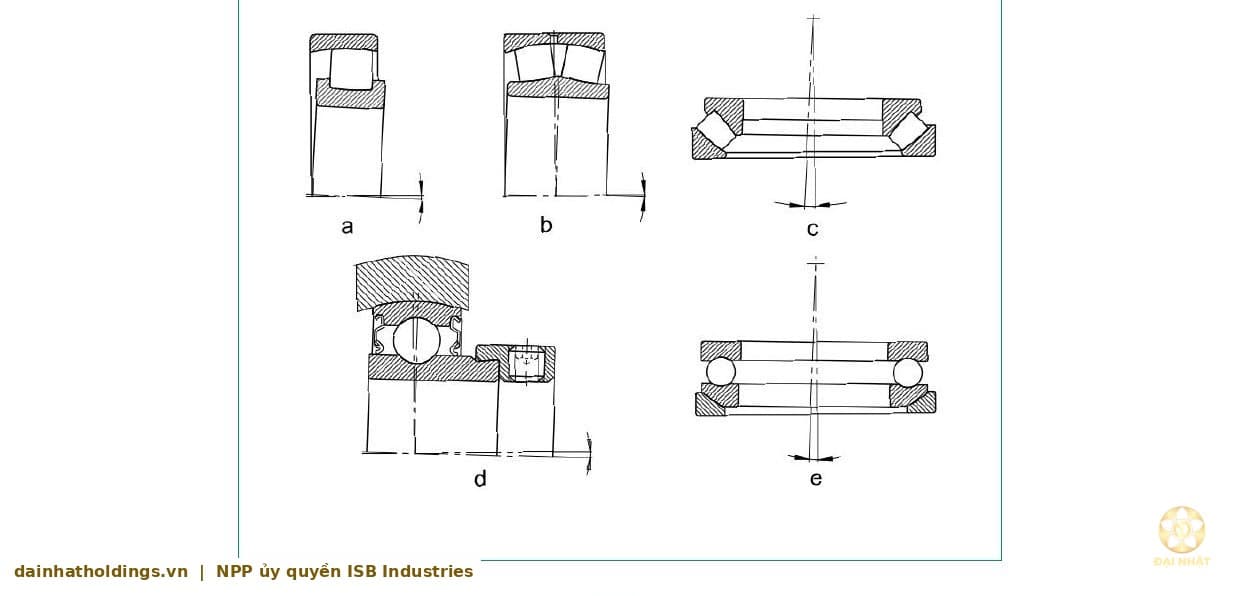
Misalignment — consequences broader than expected. A shaft mounted off-centre or at an incorrect angle doesn't just affect the bearing alone — it triggers a chain of consequences: increased friction and energy consumption, premature failure of both bearing and seals, lubricant leakage, even broken coupling bolts and increased vibration or noise. For positions with high misalignment risk, the solution is a self-aligning bearing — one with a spherical outer raceway that lets the inner ring adjust its angle within a defined range. This is also part of the ISB industrial bearing range Dai Nhat Holdings distributes as an authorized partner in Vietnam.
Quick reference: failure within the first week of operation usually points to incorrect mounting; unusual heat and noise increasing gradually usually points to improper or contaminated lubrication; uneven wear on one side of the raceway usually points to misalignment; premature failure despite correct mounting and grease usually points to wrong type or size selection.
When a bearing fails early, don't jump to a product-defect conclusion — 3 of the 4 most common causes come from selection, mounting, or maintenance. If this happens, send details through the contact form — the Dai Nhat Holdings technical team, authorized distributor of ISB industrial bearings in Vietnam, will help analyse the cause using the batch traceability system.